
The Telehealth First Amendment Ruling: What It Actually Means for Your Practice

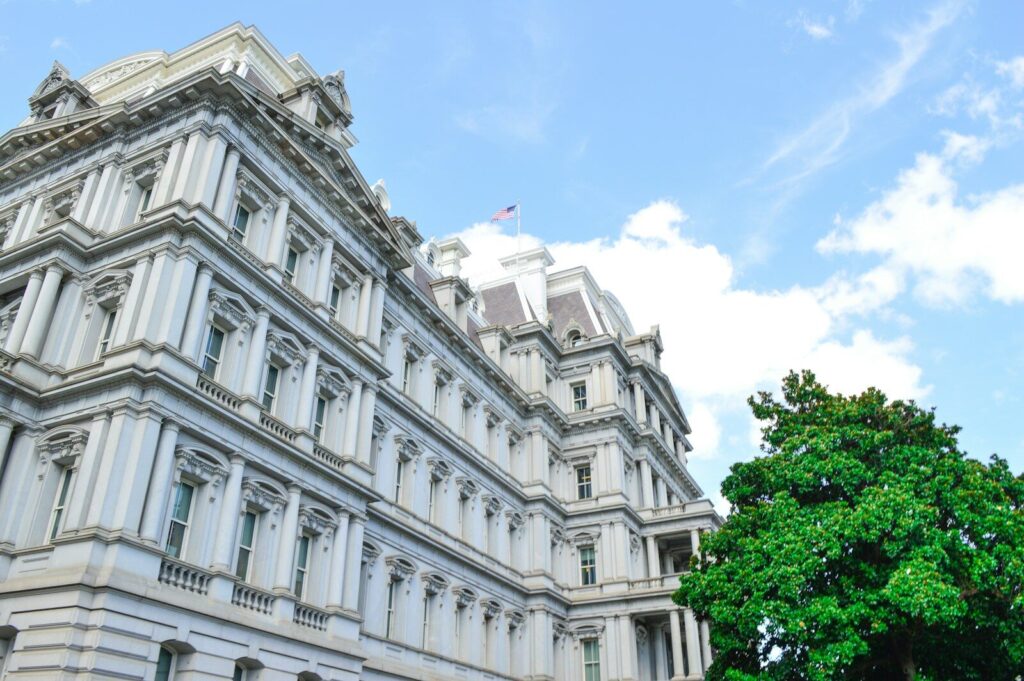
A federal court struck down D.C.’s rule barring out-of-state providers from seeing D.C. clients online. Before you assume the borders just opened, read the fine print.
If you practice telehealth, you have probably heard the headline by now: a federal judge issued a telehealth First Amendment ruling that struck down a licensing law restricting cross-border online therapy. For clinicians who have spent years turning away clients across state lines, it sounds like the wall finally came down.
It didn’t. Not yet, and not the way most of the coverage suggests. But the ruling matters, and understanding what it does and doesn’t do is the difference between a smart read on where the field is heading and a licensing-board complaint.
What the court actually decided
In June 2026, the U.S. District Court for the District of Columbia struck down a D.C. law that barred therapists licensed elsewhere from providing online telehealth to clients located in D.C. The case was brought by Elizabeth Brokamp, a counselor licensed in Virginia with more than two decades of practice, who was told during the pandemic telehealth boom that she could not take on new D.C. clients because she lacked a D.C. license.
The judge’s reasoning is the interesting part. He held that because Brokamp’s counseling consists essentially of talking with her clients, the licensing requirement functioned as a restriction on speech, and therefore triggered First Amendment scrutiny. On that basis, the court blocked D.C. from enforcing its licensure requirement against her.
That is a meaningful legal argument, and it is part of a broader wave of First Amendment challenges to occupational licensing that treat speech-based professions differently from hands-on ones.
Why this telehealth ruling is narrower than the headline
Here is where clinicians need to slow down. Three limits matter.
First, the ruling was as-applied, not a facial strike-down. The court blocked enforcement against Brokamp specifically. It did not erase D.C.’s licensing law for everyone, and it certainly did not erase anyone else’s.
Second, it binds D.C. only. A federal district court in the District of Columbia does not set precedent for Vermont, New York, Connecticut, Massachusetts, or anywhere else. Your obligation to be licensed in the state where your client is physically located has not changed. For a full breakdown of where you can and cannot practice, see our guide to telehealth across state lines. If your client sits in a state where you are not licensed, this ruling does nothing for you.
Third, it is a trial-court decision and is likely to be appealed. Until it survives review or gets adopted by courts elsewhere, its weight is directional, not binding. Building your practice around it right now would be building on sand.
What it signals about where the field is going
None of that makes the case irrelevant. The reasoning, if it holds and spreads, points at a real fault line in how we license talk therapy.
The argument that counseling is protected speech has been gaining traction, and courts are increasingly willing to distinguish professions that are primarily conversation from those involving physical procedures. If appellate courts adopt this framing, the long-term pressure on state-by-state licensing for telehealth could grow. That would not eliminate licensing, but it could reshape how states justify and structure it.
For now, the more practical accelerant remains the interstate compacts. Counseling has the Counseling Compact, psychology has PSYPACT, and social work has begun rolling out its own compact. Those mechanisms, not this lawsuit, are the realistic near-term path to legitimate multi-state practice.
What you should actually do
Nothing about your compliance posture should change based on this telehealth First Amendment ruling. Keep practicing only where you are licensed or covered by a compact privilege. If you want to expand across state lines, the compact route is the clean one.
What this ruling gives you is not permission. It is a signal worth tracking, and a reminder that the licensing landscape for telehealth is genuinely in motion.
Bottom Line
A federal court found that D.C.’s cross-border telehealth ban violated one Virginia counselor’s free-speech rights. It is real, it is interesting, and it may be a preview of larger changes. But it is narrow, local, and likely headed for appeal. It does not let you see clients in states where you are not licensed. Watch the trend, use the compacts, and keep your license map exactly where it is.
The Wellness Collaborative helps clinicians build stronger, more sustainable practices. Explore our CE courses and community at wellnesscollaborative.io.
This post is for informational purposes only and does not constitute legal advice. Licensing requirements vary by jurisdiction and change frequently. Consult your licensing board or an attorney before making decisions about cross-state practice.